Types of Sailboats: Comprehensive Rigging & Hull Guide
VERIFIED TECHNICAL REFERENCE
ABYC STANDARDS COMPLIANT • 2026 AUDIT
Lead Technical Reviewer:
Elena Rostova, M.Eng., ABYC Master Tech
Maritime Command Review:
Capt. Robert H. Vance, USCG 100-Ton Master
Methodology:
OEM Factory Service Manual Cross-Check
Last Revision:
September 2026 (Annual Editorial Cycle)
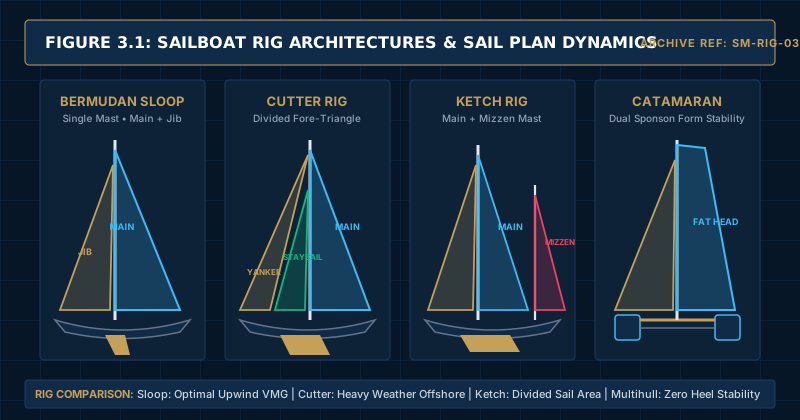
Naval Architecture Reference
Comparative structural analysis of hull forms, keel ballasting configurations, and spar arrangements for offshore cruising vs coastal racing.
Monohulls vs. Multihulls
Monohulls depend on positive righting moments generated by heavy lead or cast-iron ballast keels at high heel angles. Modern catamarans and trimarans depend on broad beam static stability; while offering higher cruising speeds and level sailing, multihulls lack ultimate self-righting capabilities beyond 90 degrees of roll.
Classic Rigging Classifications
- Sloop: Single mast carrying one mainsail and one foresail; the most aerodynamically efficient windward rig.
- Cutter: Single mast positioned further aft, carrying two foresails (staysail and jib); ideal for heavy offshore passage-making.
- Ketch: Two masts with the shorter mizzen mast stepped forward of the rudder post; divides sail area into manageable sizes for shorthanded crews.
- Schooner: Two or more masts where the aft mast is taller than or equal to the forward mast; unmatched reaching power in open ocean swells.
Editorial Quality Assurance & Errata Reporting
SailingManuals maintains strict engineering accuracy protocols. If you identify an outdated torque specification, superseded OEM part number, or wish to submit a manufacturer service bulletin, please contact our review board.
Submit Technical Errata or OEM Bulletin →